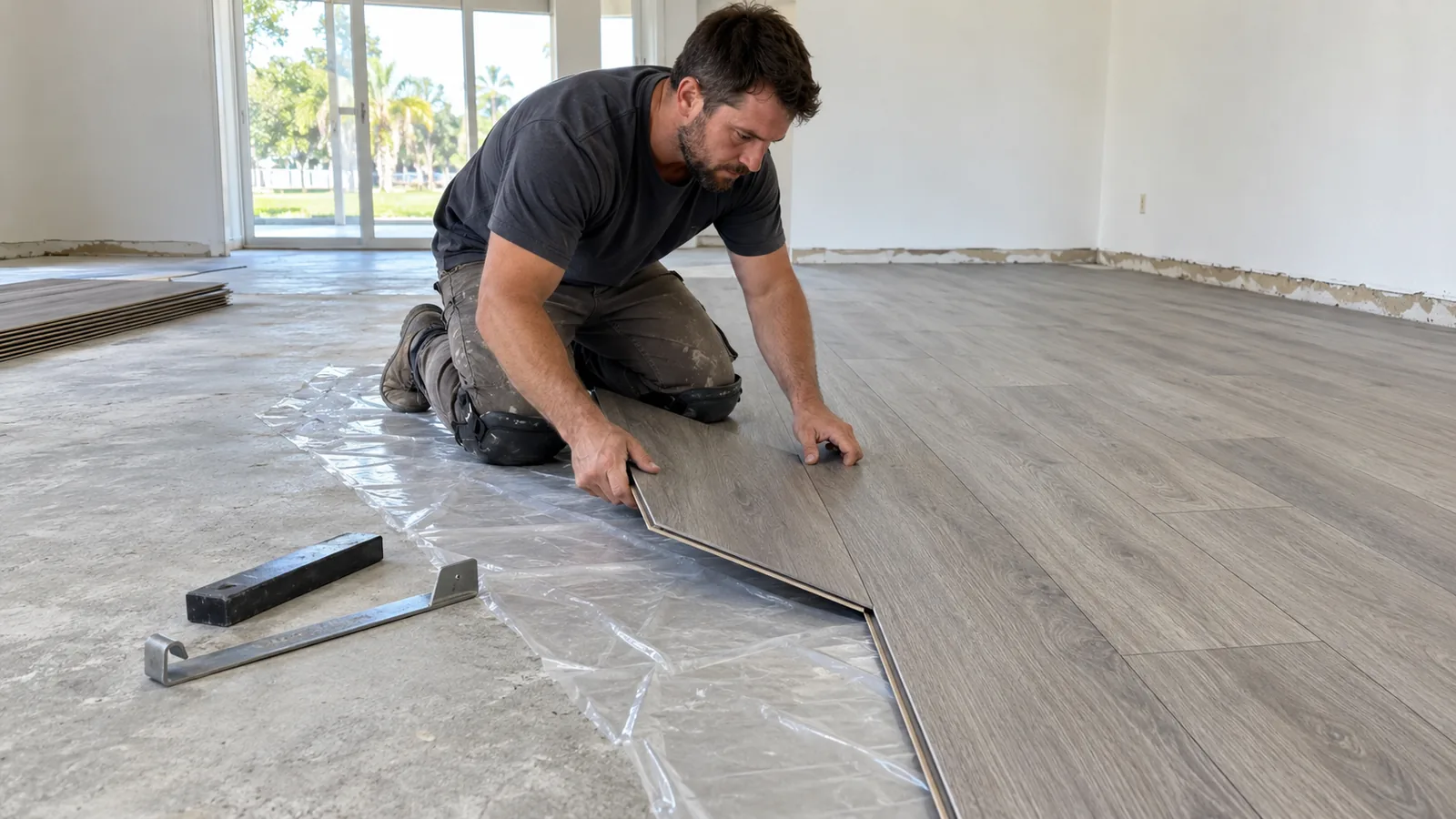
Slab and humidity check
Rigid core plank can't bend to follow a dip in the slab, so low spots get filled with patch or self leveling compound first. Ask how the slab will be checked for flatness and moisture, and whether the plank's attached pad is enough on its own.
SPC or WPC: What the Core Means for You
Most vinyl plank sold today has a rigid core. SPC, a stone and plastic blend, is the stiffer and tougher of the two. It resists dents from furniture and usually costs a bit more.
WPC has a foamed core that feels softer and a little warmer underfoot. It's quieter, but it gives more under a heavy piano leg. Both are waterproof planks; the seams and edges are where water still gets through if the room floods.
Wear Layer and Thickness
The wear layer is the clear top coat that takes the scratches. A thicker wear layer holds up better to dogs, kids and beach sand. A thicker core also locks more firmly and survives the install better at the board ends.
Thin, cheap planks can break if they ever need to be pulled up. Better cores can often be unclicked and laid again if a mistake is caught early.
How a Good Install Goes
- Flatten the floor first. Grinding high spots and filling low ones is the step most often skipped, and the one behind most gaps, clicking and lifted seams later.
- Plan the first row. The installer lays out the rows on paper or with loose boards so you don't end with a thin sliver against the far wall.
- Mix the boxes. Pulling from several cartons at once keeps one batch from showing up as a patch of different color.
- Stagger the seams. End joints should sit well apart, at least the width of a board and never closer than about nine inches, with no stair step pattern across the room.
- Undercut door jambs. The plank should slide under the jamb, not stop short with a bead of caulk. This is the easiest place to spot amateur work.
- Leave the gap. A floating floor needs about a quarter inch at every wall, hidden by baseboard or quarter round.
The Underlayment Trap
Many planks come with a pad already attached. Adding a second foam layer under them feels like an upgrade, but it can make the joints flex and can void the manufacturer's warranty.
The right answer is whatever that product's install guide says. On a slab, that often means a moisture barrier film and nothing else.
Where Vinyl Plank Makes Sense
Kitchens, laundry rooms, bathrooms and busy family rooms are where it earns its keep. In stress tests it beats laminate and engineered wood on scratches, dents and standing water.
It is not perfect. Dragging furniture can leave marks in the textured surface. Felt pads under chair legs fix most of that. For bigger moves, lift, don't drag.
Cost in Plain Terms
Vinyl plank usually costs less than hardwood or tile and a little more than carpet. The real number depends on the core, the wear layer, how much leveling the slab needs and whether stairs are involved.
See the LVP installation cost guide for the line items.
Comparing it with other floors? Read laminate flooring installation or our take on the best flooring for homes with pets.
Want a measured price for your rooms? Send the estimate form or call (904) 555-0186.